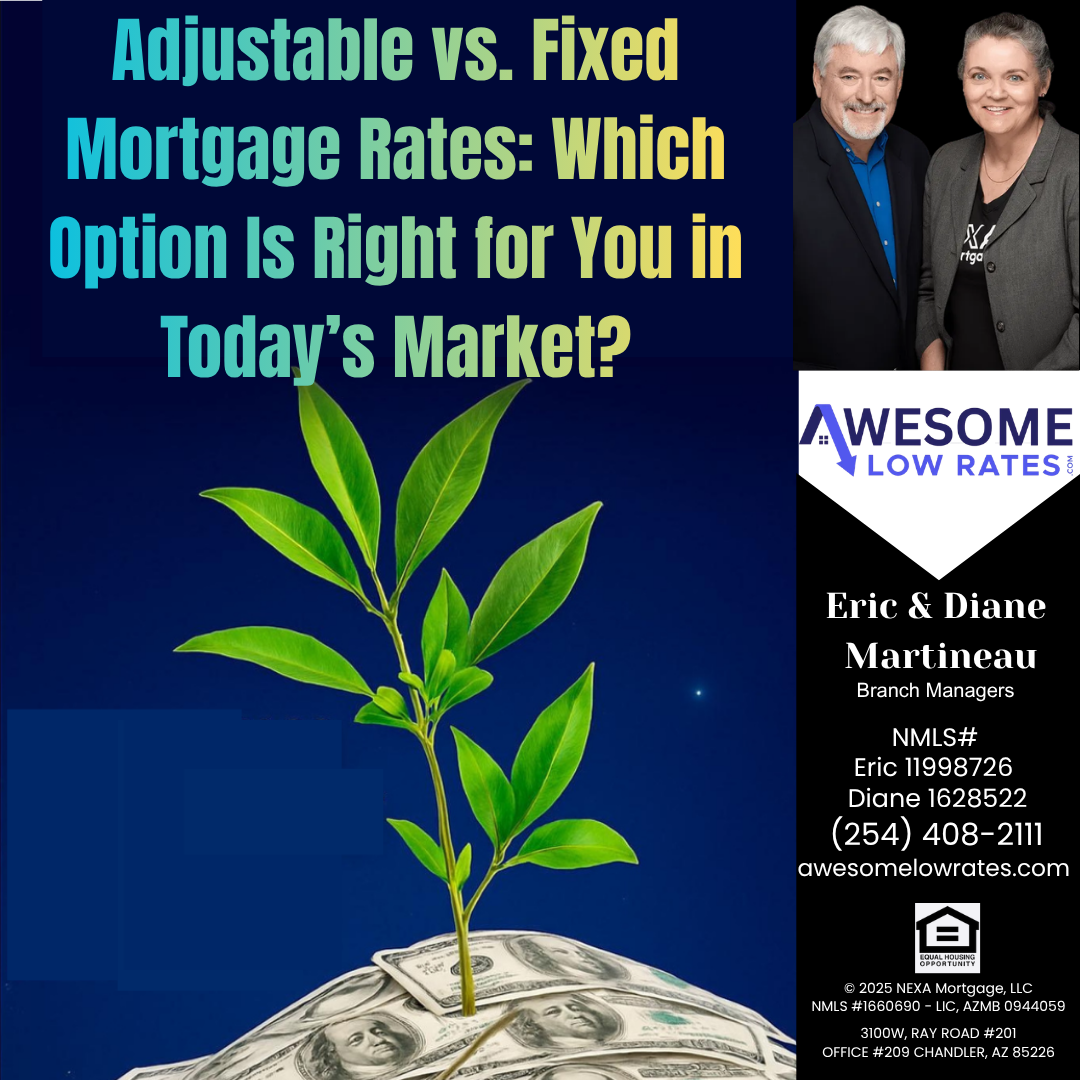
Adjustable vs. Fixed Mortgage Rates: Which Option Is Right for You in Today’s Market?
Buying a home in 2026 involves more financial strategy than ever before. With interest rates influenced by inflation, economic policy, and market conditions, choosing the right mortgage can have a major impact on your long-term financial outcomes.
One of the biggest decisions homebuyers face is choosing between a fixed-rate mortgage and an adjustable-rate mortgage (ARM).
Each option comes with unique advantages and risks. The right choice depends on your financial goals, how long you plan to stay in the home, and your comfort level with changing payments.
This guide breaks down both options so you can make a confident and informed decision with help from AwesomeLowRates.com.
What Is a Fixed-Rate Mortgage?
A fixed-rate mortgage locks in your interest rate for the entire life of the loan — commonly 15, 20, or 30 years. Your principal and interest payment stays the same from start to finish.
Benefits of a Fixed-Rate Mortgage
-
Consistent Payments: Your monthly payment remains predictable
-
Protection From Rising Rates: Your rate won’t change even if the market does
-
Simple and Stable: Easy to understand and budget around
Drawbacks
-
Higher Starting Rates: Typically higher than initial ARM rates
-
Less Flexibility: You won’t benefit automatically if rates drop
-
Potentially Higher Long-Term Cost: If rates stay low for years, you may pay more overall
👉 Fixed-rate mortgages are ideal for stability and long-term planning.
What Is an Adjustable-Rate Mortgage (ARM)?
An adjustable-rate mortgage starts with a fixed interest rate for a set period — often 3, 5, 7, or 10 years — before adjusting periodically based on market conditions.
For example, a 5/1 ARM means:
-
Fixed rate for 5 years
-
Adjusts once per year after that
Benefits of an ARM
-
Lower Initial Rate: Often starts below fixed-rate options
-
Potential Short-Term Savings: Ideal if you don’t plan to stay long
-
Flexibility: Can reduce early mortgage costs
Drawbacks
-
Rate Uncertainty: Payments may increase after the fixed period
-
Market Exposure: Rising interest rates can impact affordability
-
More Complexity: Requires understanding adjustment rules and limits
👉 ARMs are best suited for short-term ownership or strategic financial planning.
Should You Buy Now or Wait for Lower Rates?
Many buyers consider waiting for interest rates to drop — but predicting the market is extremely difficult.
Here are some factors to consider:
-
Home prices may increase over time
-
Waiting could reduce your equity-building opportunity
-
Lower rates can bring more competition among buyers
A common strategy is to buy now and refinance later if rates improve — as long as your current payment fits comfortably within your budget.
Step 1: Consider Your Timeline
Your expected time in the home plays a major role in your decision:
-
Short-Term (Under 10 Years): An ARM may offer savings through lower initial payments
-
Long-Term (10+ Years): A fixed-rate mortgage provides stability and predictability
Step 2: Understand Your Risk Comfort Level
Ask yourself how comfortable you are with financial uncertainty:
-
Fixed-rate loans offer predictable, steady payments
-
ARMs offer lower initial costs but can change over time
Your personal comfort with risk should guide your choice.
Step 3: Compare the Total Cost
Look beyond monthly payments and evaluate the full picture:
-
Total interest paid over time
-
Taxes, insurance, and other housing costs
-
Possible future rate adjustments
-
Refinancing scenarios
A lower payment doesn’t always mean a better deal long term.
Step 4: Don’t Forget Additional Home Costs
Owning a home includes more than just your mortgage:
-
Property taxes
-
Insurance
-
Maintenance and repairs
-
HOA fees
-
Utilities
Lower initial payments with an ARM may give you more flexibility to manage these expenses early on.
Step 5: Example Comparison
Loan Amount: $400,000
Fixed-Rate Mortgage (6%)
-
Monthly Payment: About $2,398
-
Payment remains stable over time
5/1 ARM (5% initial rate)
-
Monthly Payment: About $2,147 for first 5 years
-
After adjustment (example at 7%): about $2,661
Key Insight:
-
If you sell within 5 years, the ARM may save money
-
If you stay longer without refinancing, the fixed-rate may be the safer option
Step 6: Lifestyle and Emotional Factors
Your mortgage should also match your lifestyle:
-
Fixed-rate: Best for peace of mind and long-term stability
-
ARM: Better for flexibility and short-term savings
-
Moving soon? An ARM could be advantageous
-
Planning to stay long-term? Fixed may be more suitable
Step 7: Why Professional Guidance Matters
Working with experienced mortgage professionals can help you:
-
Compare fixed and adjustable scenarios
-
Evaluate your financial situation accurately
-
Understand potential risks and benefits
-
Plan for refinancing opportunities
Expert guidance ensures you choose a mortgage that aligns with your long-term financial strategy.
Final Takeaway
There is no one-size-fits-all answer.
-
Fixed-Rate Mortgage: Best for stability, predictability, and long-term ownership
-
Adjustable-Rate Mortgage: Best for short-term savings and flexibility
Instead of trying to predict the market, focus on what works best for your financial situation today and your future plans.
Take the Next Step With Confidence
Choosing the right mortgage can shape your financial future for years to come.
Visit 👉 https://awesomelowrates.com/buy-a-home/ to explore your options and learn more about today’s mortgage opportunities.
Or schedule a personalized consultation today.
Work with knowledgeable mortgage professionals who can:
-
Compare fixed vs. adjustable-rate options
-
Help assess your financial goals
-
Identify opportunities to save
-
Guide you toward a confident decision
Your mortgage is more than a loan — it’s a long-term financial strategy. Make it count.